
About: A coastal Orange County city known for its beaches and surf culture, Huntington Beach consists of some of the most heavily used shoreline in the state, drawing more than two million visitors a year and stretching two miles from Beach Boulevard to the Santa Ana River mouth.
Conservation Efforts: Huntington Beach is also home to remnant coastal wetlands (Talbert, Brookhurst, Magnolia, and Newland marshes) and a stretch of state beach that hosts one of the most important shorebird nesting colonies in Southern California. At its southern end, Huntington Beach hosts the Least Tern Natural Preserve, comprising 12.4 acres of protected beach habitat that has been reserved for nesting shorebirds since the 1960s. Western Snowy Plovers have also started nesting here in recent years. Since then, the District’s Natural Resource Management staff have treated the plover as one of its priority species and established programs to educate beachgoers during the breeding season and coordinating monitoring and enforcement with OC Habitats, the Huntington Beach Wetlands Conservancy, Sea and Sage Audubon, and Orange County Coastkeeper to help reduce disturbance during the Fourth of July. Additionally, routine nest monitoring and banding events occur, providing both local and regional data for site managers and agencies.
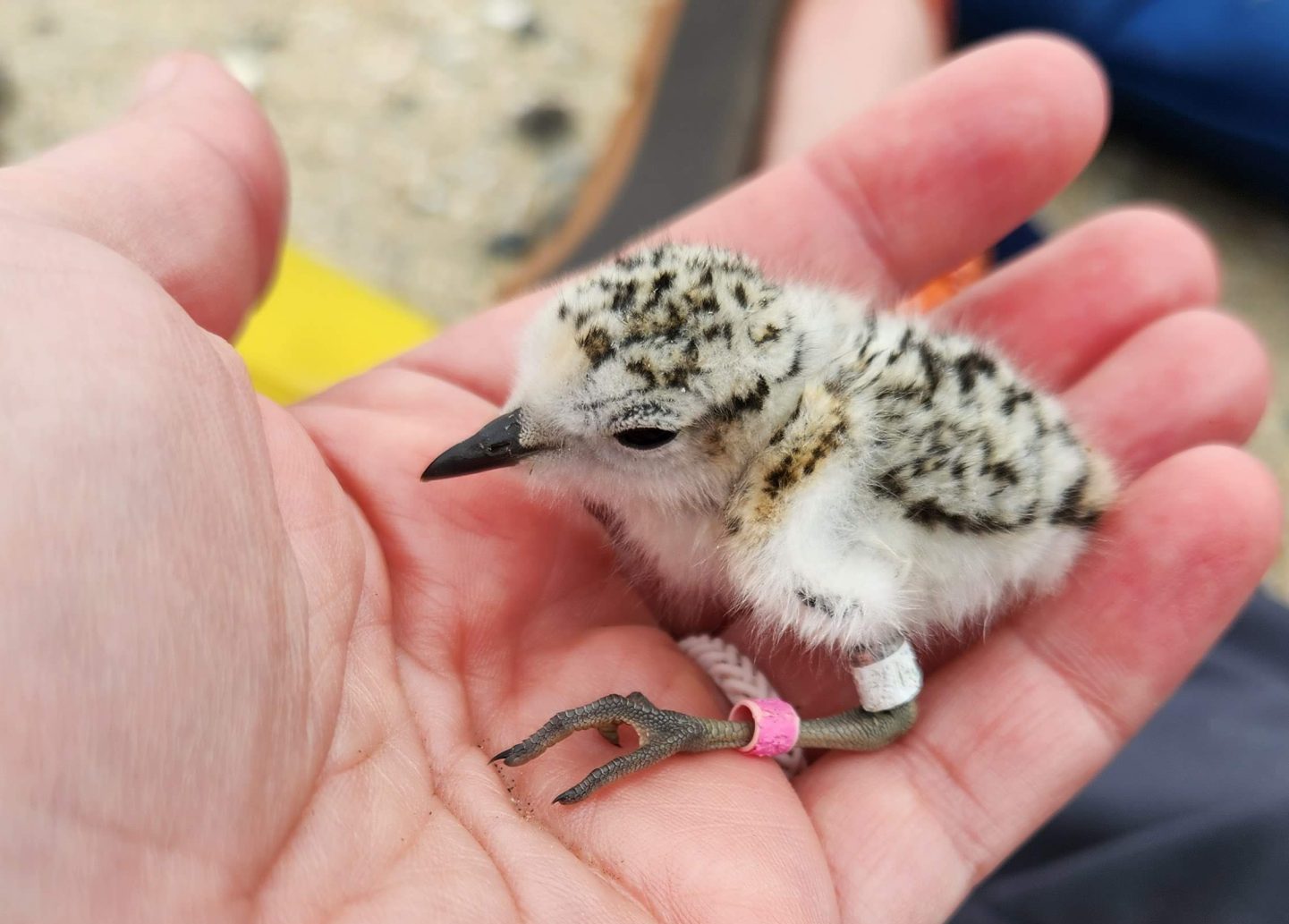
Our Role: WI provides Western Snowy Plover banding services to the Orange Coast District during the breeding season in coordination with the District’s Environmental Scientist. WI biologists capture, measure, and band plovers and chick broods with unique color-band combinations that allow individual birds to be identified in the field without recapture. This provides valuable information regarding chick survival, which adults return to nest the following year, and movement between sites along the Pacific coast, tying the District’s small population into the range-wide monitoring network that tracks plover recovery.