
About: Foster City is a planned waterfront community on the western shore of San Francisco Bay in San Mateo County, built in the 1960s on engineered fill and organized around a 200-plus-acre man-made saltwater lagoon that threads through the city’s neighborhoods, beaches, and parks. That lagoon, together with the Bay Trail levee and more than 24 community parks, support numerous land and water recreation activities, with the shoreline parks and sports fields along its edge among the most heavily used public spaces in the community.
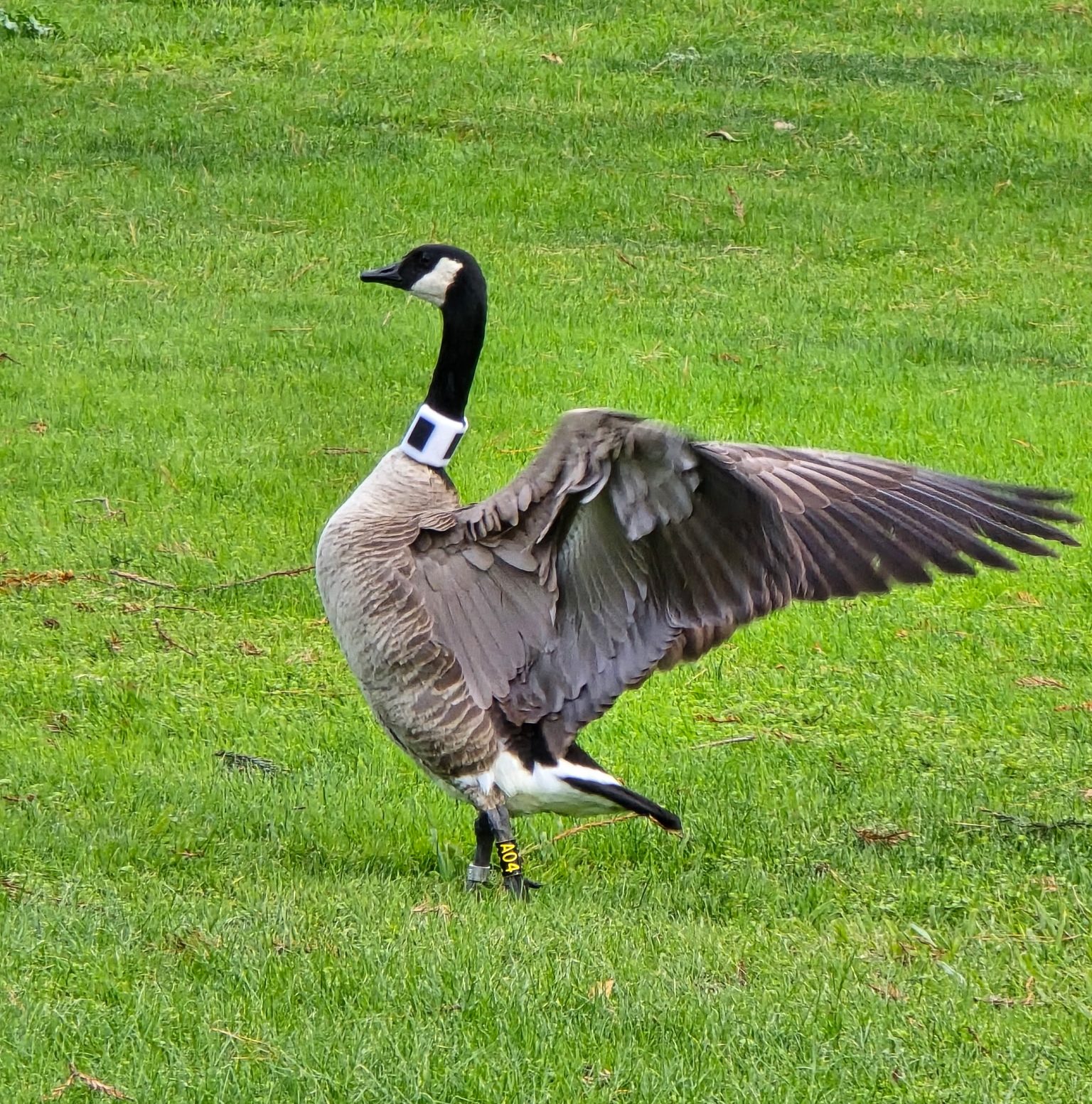
Wildlife Conflict: Some of the same features that make the city appealing to its citizens, also make ideal habitat for resident, non-migratory Canada Geese, whose population has grown steadily for well over a decade. Canada Geese are a common sight in nearly all of Foster City’s 24 parks, and their impact reaches well beyond the inconvenience of droppings on a path. Grazing geese have damaged turf on sports fields and recreation areas across the city, and the feces they leave behind rendered fields, beaches, and lawns unusable for stretches at a time, imposing cleanup and repair costs that strained the City’s park maintenance budget. However, the more serious problem was in the water as repeated testing has documented elevated E. coli in the lagoon system at levels unsafe for human contact, forcing the City to post advisories against swimming and water recreation. Water quality analyses pointed to waterbird feces, including geese, as one of the sources. The City’s Healthy Waters, Healthy Parks initiative was launched to confront this through lagoon aeration and water quality monitoring, park sanitation, and reducing goose activity. Over the years the City tried numerous techniques to reduce such activity, but geese activity kept growing.
Our Role: WI has worked with Foster City since 2023, when initially retained to prepare its Integrated Adaptive Canada Goose Management Plan, including the accompanying CEQA review. The Plan analyzed local goose population dynamics and impacts and identified seven priority parks where a coordinated, non-lethal program could have the greatest effect. In 2025, WI was selected to implement that program as a multi-year pilot. The program has comprised an array of surveillance and monitoring techniques to establish a defensible baseline of goose use and distribution pre and post management, allowing for more quantifiable data to be used as measures of program success and to steer and further enhance management initiatives. The hazing program integrates a trained dog team, lasers, aerial drones, remote-controlled aquatic and amphibious devices, audial deterrents, and other devices, deployed in a manner to reduce or prevent habituation. Additionally, during nesting season, our biologists locate nests and addle eggs under federal authorization and established humane protocols, limiting population growth at its source and reducing site fidelity. All management techniques are georeferenced and logged in real time, with data analysis of the results performed using effort-standardized metrics and statistical modeling to measure site- and technique-specific success, providing a management strategy that adapts as the geese do.